Celebrate Imbolc with me
The Wheel of the Year contains eight holidays, or sabbats. Two are solstices, two are equinoxes, and the other four are essentially mid-points between those four “fixed” dates. Imbolc occurs at roughly the midpoint between the Winter Solstice and the Spring (or Vernal) Equinox. This year, Imbolc takes place from Saturday, January 31st to Monday, February 2nd. I will be hosting my event observing and celebrating Imbolc on February 1st from 4 pm EST to 5:15 pm EST.
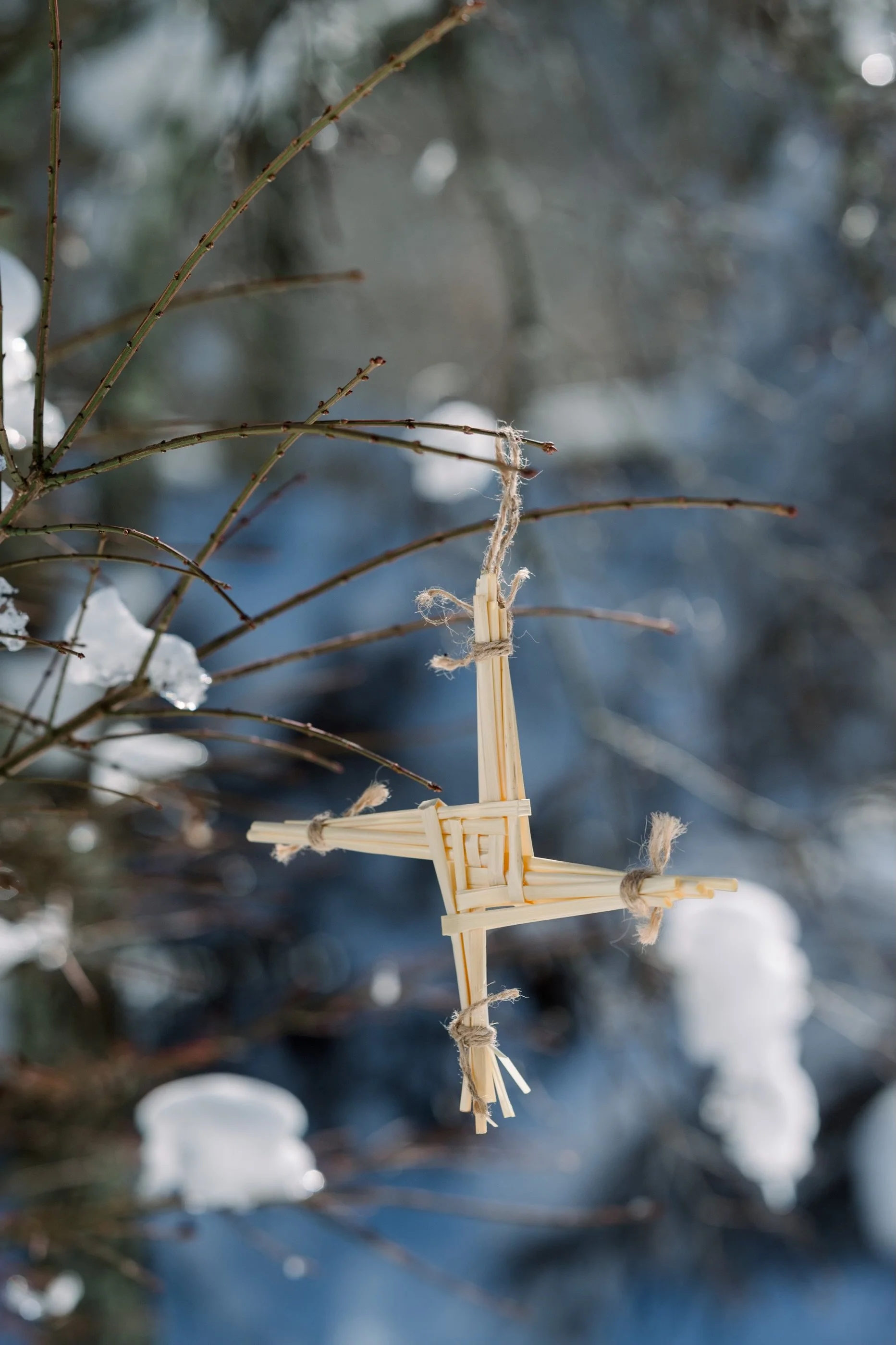
Imbolc itself is an ancient Celtic festival that is all about the returning of the light. It coincided with the blossoming of snowdrops, and with the start of lambing and calving season; as a result, it is a celebration of the stirrings of new life despite the existence of winter. For those of us in areas that get snow, Imbolc can occur while the world outside is covered in snow and ice; yet we know that as the days lengthen, the trees are beginning to wake up again and life is starting to stir underground, even if we can’t see it yet. (The existence of Groundhog Day just after Imbolc is no coincidence.)
Imbolc is also historically associated with Brigid, a Celtic goddess who governed poetry, healing, and smithwork. She was associated with both fire and with water, representing light and purification. For that reason, traditional celebrations have included fire in the form of fires or candles; she has also been associated with healing waters, sometimes in the forms of holy water (since Brigid the goddess got sort of merged with St. Brigid, a holy woman from slightly later in Irish history).
It is traditional to prepare for Imbolc by engaging in some early spring cleaning—there’s that focus on purification again. That might mean decluttering, or clearing away things that have been sitting out unattended, in order to make room for new things. It might mean cleansing your home with water or with smoke, and/or opening windows for a time in order to literally clear the air.
Baking is often associated with the holiday of Imbolc, especially bread or oat cakes. Milk and other dairy is usually part of Imbolc as well, in part as a nod toward livestock birthing season, when the cows and sheep begin to give milk. Herbal teas, especially those that are relaxing, are often incorporated in Imbolc celebrations, to promote relaxation and renewal.
It is also the unofficial start to planting season, especially for those who are starting their plants inside, using seeds. Similarly, Imbolc is a time of hope, of looking forward, and of planting new intentions, which is one of the things we will be engaging in during the Imbolc circle on February 1st. I hope you will join me!
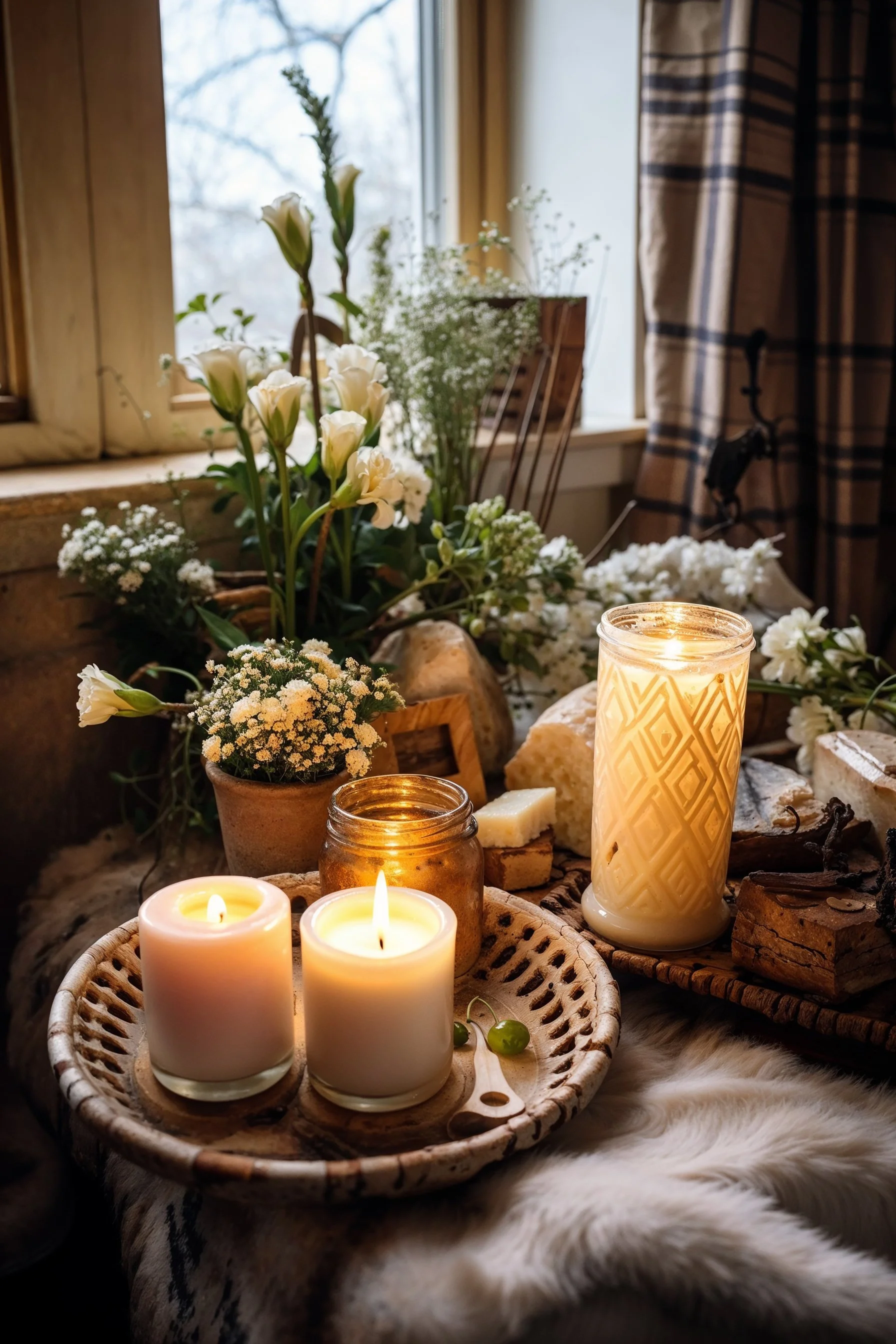
Cheese and soap (things made using sheep’s and goat’s milk) are sometimes represented during Imbolc.
I hope you will join me!
There are 18 spaces open for the Imbolc circle on February 1st from 4 pm EST to 5:15 EST via Zoom. Tickets are $33 each. A portion of each ticket sold will be donated to Feeding America, which supports local food banks, food pantries, and meal programs throughout the United States.